
U.S. Senate - Steve Bullock
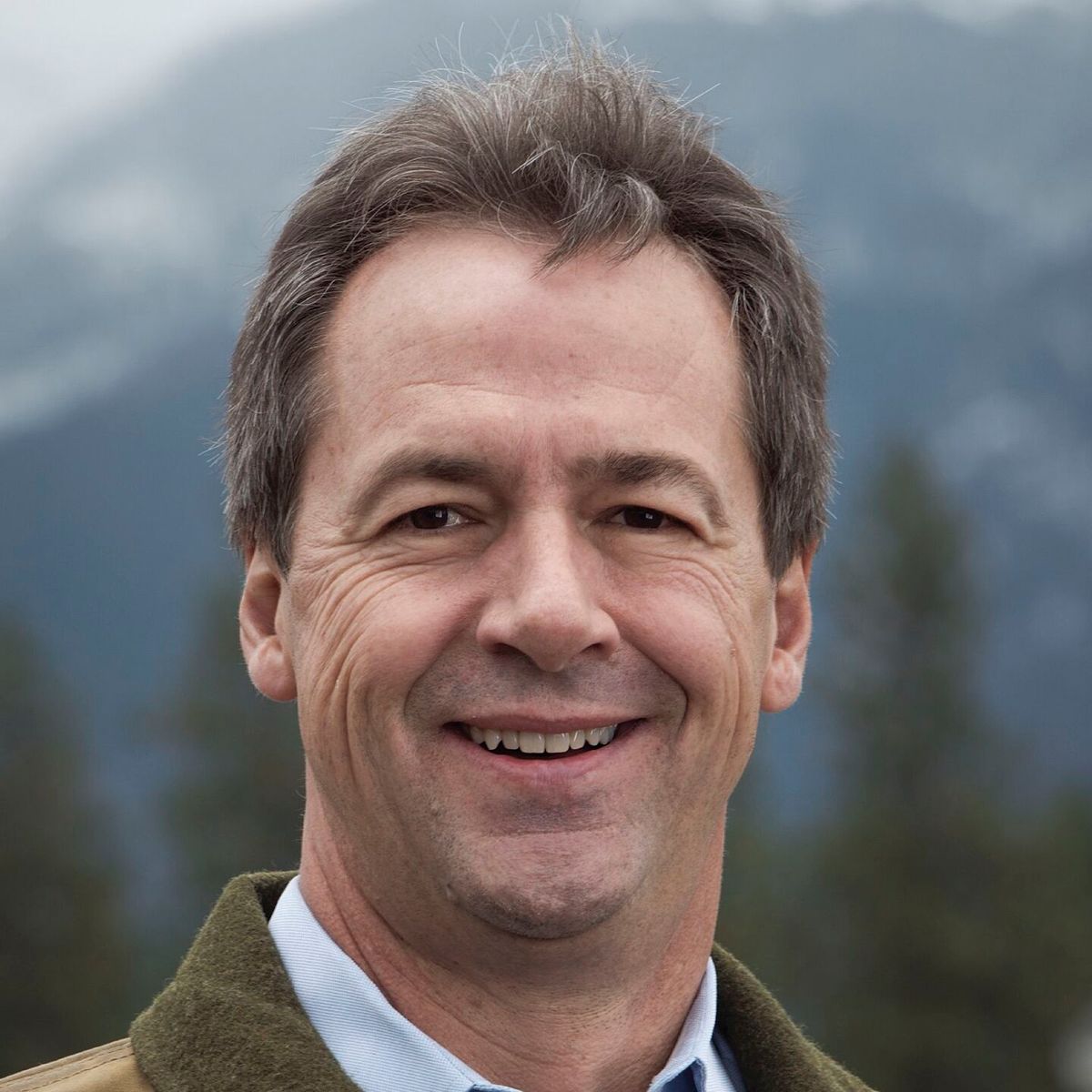
STEVE BULLOCK (D)
- Current Governor
- State Attorney General 2009-2013
- Unsuccessful bid for president in 2020
Why did you decide to run for the U.S. Senate?
This election is about leadership and who will fight for Montana in the Senate. I’m running to be an independent voice for all Montanans, not party leaders or corporate interests.
In every corner of the state, people are frustrated that DC doesn’t work for them and even now, in the middle of a huge health and economic crisis, Washington is too divided to tackle these huge problems.
Over the course of my 12 years in office, I have worked my level best to do what’s right for all Montanans — no matter where you live or who you vote for. Throughout his 8 years in Washington, Senator Daines has been out for himself and the corporate interests that fund his campaign.
While I’ve worked across party lines to expand affordable healthcare to 90,000 Montanans, Senator Daines voted with the insurance industry to strip away that coverage as well as protections for Montanans with pre-existing conditions, like asthma or cancer. As we cut the business equipment tax for small businesses in the state, Senator Daines voted to give trillions of dollars of tax cuts that disproportionately benefited big corporations and ultra-wealthy individuals like himself.
Throughout my career, I’ve worked hard to earn respect from folks who disagree with me by showing up, showing respect and listening, not just talking. We need more of that in Washington, and that’s why I’m running for Senate.
Why should MSU students vote for you?
Montana has been a gift to me. I was raised in a single parent household living paycheck to paycheck and the reason I knew there was a Governor’s house in town was because I delivered papers there as a kid.
Now, my wife Lisa and I are able to send our kids to the same public schools we attended. And whether it was growing up in Helena, attending public schools, wandering in the hills and being out in our streams and rivers – Montana has given me more than I could ever give back.
As Governor, I have worked every day to protect that Montana both today and for future generations.
We expanded affordable health care to over 90,000 Montanans, which made it possible for our rural hospitals to keep their doors open, we invested in public education and infrastructure, we froze college tuition at our public universities, and we did it all in a bipartisan way while keeping our budget balanced and creating our state’s first ever rainy day fund.
I am running for Senate because Washington isn’t working for Montana – it's working for party leaders and corporate special interests. And in these uncertain times, Montanans need a leader who is certain about who they work for.
For four years as Attorney General and eight years as Governor, I’ve never forgotten who I worked for.
In the Senate, I will fight each and every day for Montana –– not special interests –– and I’ll bring people together to invest in clean energy, make education more affordable, and protect our public lands that I had the privilege to enjoy throughout my life.
Because the Montana I grew up in is the same one I want future generations to experience as well.
What is your proudest accomplishment as governor?
Big money in politics is the defining issue of our time, and it’s been the fight of my career.
As Attorney General, I opposed Citizens United and took the fight to the Supreme Court. We may have lost, but since then, I haven’t stopped fighting the growing influence of money in our system. As Governor, I brought Democrats and Republicans together to pass one of the strongest campaign disclosure laws in the country and passed landmark legislation banning foreign money in our elections.
But in Washington, D.C., Senator Daines hasn’t lifted a finger as corrupt big money runs rampant. Daines is so beholden to special interests and corporate donors that he doesn’t do what’s right for everyday Montanans. Over his career, Senator Daines has accepted nearly $3 million from corporate PACs.
Daines has repeatedly opposed efforts to require greater transparency in campaign finance, particularly for dark money groups. In 2018, Daines voted against a measure to revoke an IRS rule that made it easier for dark money groups to shield the identities of their donors. I sued the IRS on that law and won.
I’ll keep fighting to halt the corrupting influence of dark money in our elections in Washington — just like I have all throughout my career.
If the Senate were to vote on dismantling the Affordable Care Act today, how would you vote and why?
I will vote against any and all attempts to dismantle the Affordable Care Act. While the ACA certainly isn’t perfect, the answer is not to just repeal the progress we’ve made. I firmly believe that affordable, accessible healthcare should be available to all Montanans – it shouldn’t depend on the size of your paycheck or where you live.
If Senator Daines had his way and the Affordable Care Act is repealed, over one hundred thousand Montanans would be at risk of losing coverage and people under 26 would be unable to stay on their parents’ insurance plan –– all because Daines wants to fatten the profits of the insurance industry who has given over $300,000 to his campaign. And in early October, he cast another vote to rip away Montanans healthcare coverage, after claiming in our debate that he would do the opposite. That’s not what Montanans need in the Senate.
We need to build on the ACA to make healthcare more affordable for the people we represent. When I’m in the Senate, I’ll take on pharmaceutical companies to lower drug costs by allowing Medicare to negotiate down drug prices. I’ll take on insurance companies to lower the cost of care like I have fought for as Governor. And I’ll stand up every day to the Washington politicians who want to deny you coverage.
What would your top priority as senator be concerning higher education?
Quality public education really is one of our great equalizers. I understand the impact a good public education can have on a young person because I lived it. That’s one of the reasons why as Governor I brought Democrats and Republicans together to make historic investments in our public education system. We were also able to freeze in-state tuition for Montana colleges six out of eight years and reinstate need-based state aid, making our state one of the most affordable in the nation for higher education.
Meanwhile, Senator Steve Daines has spent his years in Washington standing behind public officials who don’t have Montanans’ best interests in mind. Daines cast the deciding vote to confirm Betsy DeVos as the Secretary of Education, ignoring the hundreds of Montanans who raised their voices and urged him not to support her nomination.
It may be no surprise to Montanans that Daines voted for DeVos since he has taken nearly $80,000 in campaign contributions from the DeVos family throughout his career.
I believe that students should have access to free tuition for two year college, and once all students are in the workforce, they shouldn’t have to pay income taxes on student loan repayment benefits from their employers. By getting student loans out from under the management of for-profit corporations, we can lower interest rates and make it easier to refinance when interest rates go down.
In the Senate, I’ll put politics aside to work with both parties to take real steps to make education affordable and accessible for all Montanans.
Montana State University received roughly $10.4 million under the CARES Act. As a member of congress would you advocate for more relief funding for America’s universities during the coronavirus pandemic?
I would advocate for additional relief for our schools and higher education systems. From the start we were told the response to this pandemic would be federally supported, state managed, and locally executed. State and local governments have upheld their part in that, but we still have not seen a coherent national strategy.
From the start of the pandemic, I have worked closely with our universities to keep campuses as safe as possible, first as they chose to send students home in the spring, to partnering with MSU this summer to set up the campus lab to process COVID-19 tests, today serving as a crucial partnership in the state’s homegrown testing solutions. I also allocated $20 million in Coronavirus Relief Fund dollars to support the Montana University System’s testing and quarantine strategies as students were welcomed back to campus this fall. Most recently, the state awarded MSU with a research grant to develop a faster saliva based testing method, furthering our partnership to improve our testing capacity in Montana.
It’s becoming more and more clear that Congress isn’t going to pass another relief package until after Election Day. It is just unbelievable for Washington to give up on providing real help to the American people during this unprecedented time for our country. Congress needs to put the party politics aside and actually get something done for Montana workers, families, small businesses, and schools.
We need to take real steps to help Montanans get back on their feet, and implement a national strategy to get a handle on this virus. In addition to more relief funding for higher education, I think a good place to start would be getting direct support to state and local governments, restoring funding for additional unemployment benefits, supporting our small businesses and fully funding the USPS.
In the Senate, I’ll work with Republicans and Democrats to break through this gridlock in Washington to get real help to our communities.
With the passing of Ruth Bader Ginsburg, should the Senate immediately move to confirm a replacement or wait until after this year’s election and why?
I think the Senate should follow the precedent set by Senators Daines and McConnell in 2016 to wait until after the inauguration to fill Justice Ginsburg’s seat on the Supreme Court. Montanans have already begun voting, we should let them determine who they want to nominate and confirm the next Justice to this lifetime appointment.
And this isn’t my idea - four years ago, Senator Daines suggested the exact same process. He said we should ‘let the people speak.’ Montanans should be able to count on their Senator to keep his word.
Let’s not forget the real stakes of this seat either. On November 10, one week after the election, the Supreme Court is set to hear arguments on whether to dismantle protections for 152,000 Montanans with preexisting health conditions, gut our Medicaid expansion that covers nearly 1-in-10 Montanans, and risk critical drug benefits that our seniors rely on to lower the cost of prescription drugs. The stakes of this case are enormous for Montanans’ access to healthcare, especially in the middle of a global pandemic.
To rush through the confirmation process in violation of this precedent would only worsen our deep political divides while jeopardizing hundreds of thousands of Montanans’ access to healthcare.
Does the federal government have a responsibility to help combat climate change and why?
Montanans are outdoors folks. Our fire seasons are 40 days longer now than they were 30 years ago, and our farmers are seeing changes in their planting seasons. From our way of life to our economy, we’re already experiencing the effects of climate change.
We can address climate change by increasing renewable energy production while creating good jobs and not leaving our communities behind, which is what I have tried to accomplish as Governor. We doubled Montana’s wind power and quadrupled our solar power generation.
Meanwhile, Senator Daines has had his head in the sand and his hands in the pockets of big oil and gas companies. He’s taken a million dollars in campaign contributions from the fossil fuel industry. It’s pretty clear that he’s busy in Washington looking out for his corporate backers, not Montanans.
In the Senate, I’ll work to invest in clean energy, fight climate change, and also explore new ways to use coal as an energy source while limiting our impact on the environment through carbon capture and sequestration.
With the polarizing political climate that we are currently experiencing, how do you plan to work across the aisle to get bills passed?
The political divides in our country are real, but we have to be able to put the partisanship aside to do what’s right by the people we represent. That’s what we’ve been able to do in Montana while I’ve been Governor.
From freezing tuition at our public universities to kicking dark money out of state elections, every single one of my legislative accomplishments has been done with a legislature that’s nearly two-thirds Republican.
It’s not always easy and we certainly have our serious disagreements on the issues, but we cannot let that prevent us from getting real things done.
That’s why I’ll not just take steps but prioritize building relationships with my colleagues across the aisle, find areas that we can all agree on like campaign finance reform or infrastructure, and buck party leadership to actually get things done for Montana in Washington.
In regards to the Black Lives Matter and Defund the police movements, how would you help to improve the relationship between law enforcement and minority communities?
As a nation we need to identify and address the historical disadvantages and discrimination that still have impact today. We also need to protect avenues for people to express those First Amendment rights.
I don’t support defunding the police, but I believe Congress should work with law enforcement to do better by all communities. I support requiring body cameras, banning choke holds, and ending no knock warrants in drug cases. I also support greater state and federal authority to investigate police misconduct and more training for our officers.
As Senator, I will work with Democrats and Republicans for meaningful reform.
The U.S. Postal Service has been in the local news lately with Post Office drop boxes being removed in Montana communities. Would you as senator work to fund the postal service or move to privatize mail delivery?
The U.S. Postal Service is a critical lifeline for Montana’s rural communities, tribal nations, veterans and seniors. That’s why I filed a lawsuit against Postmaster General DeJoy’s unlawful changes that harmed mail delivery in our state. Just recently, following that lawsuit, DeJoy agreed to settle in court to reverse the harmful changes he had made.
But while I was speaking out and taking action against mail delivery changes, Senator Daines shrugged off those concerns. Even though reports showed that changes to mail delivery caused significant and increasing delays in prescription drug deliveries, Senator Daines called it a “nonexistent problem.” We need someone in the Senate who will stand up for the USPS, not stand silent when it needs support the most.
We need to take real action and fully fund the USPS, and in the Senate, I’ll fight hard to make sure the USPS has the resources and support it needs to be fully functional for all Montanans.


Comments ()