
Waded Cruzado, you are Pure Gold!
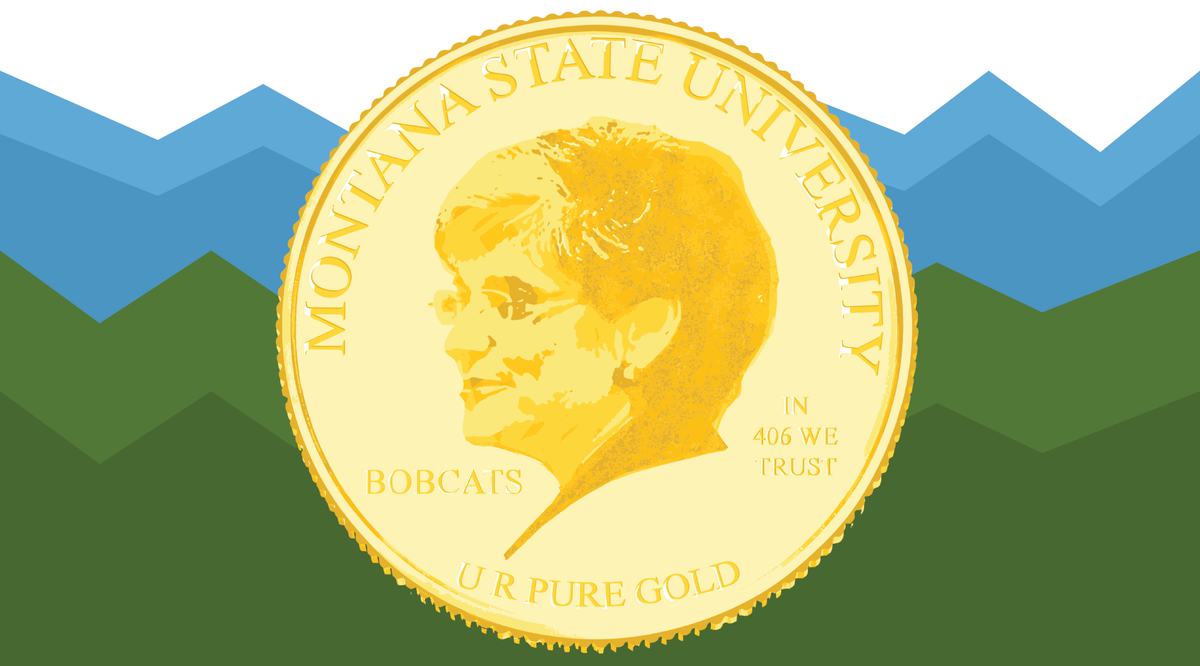
The Exponent was lucky enough to interview MSU President Waded Cruzado and to ask her a few questions in the hopes of painting a picture of who she is as a president and a person. We hope that this profile gives the Exponent’s readers a chance to better know President Cruzado.
Q: What do you hope that every student can get out of an MSU education?
WC: I believe in a holistic approach to higher education which, in my mind, means that we are going to give our students the very best education so that they can become competent professionals, engaged citizens and leaders, and happy, healthy human beings. If we can provide you with an experience where you understand where you understand that you are not just an intellectual being, you are not just a social being, that we need all of those three things then that is what we want. And we have to stay vigilant to both what happens in the classroom and what happens outside of it. Are we communicating those institutional values in every building, in our extracurricular offerings or in courses they are taking outside of their major? Everything in the university needs to communicate those values.
Q: Why are you so passionate about education?
WC: I’m passionate about education because education is really a transformative energy. Education changes people. It changes the way we think, the way we interact with others. It changes our perspective about the world and the universe, and it can significantly improve the human condition.
Q: Do you have an approach to failure? In college there’s a lot of times where it feels like you’re pushing that boundary a little bit. What kind of advice would you give students on how to approach this?
WC: Failure is very formative in my mind, failure is the great teacher. It means that there were some things, some lessons, that we needed to learn, right? The most important part of failure is the rebound part. The coming back. The resilience.
A few years ago I started thinking a lot about failure because in many of our leadership programs, people talk about success, and success is so attractive. But I am also very intrigued by failure. Where are the landmines? Where are the things that I need to avoid? And when I fall, because I will fall, and when I fail, because we all fail, how do I muster enough courage to come back?
There is a great impetus now in many areas around the topic of resilience, and I think that is very important for all of us — understanding that there is no way we will avoid failure, but coming back, rebounding, and becoming a better person afterwards. That is the most important part of failure.
Q: If you were to go back to school, what would you study? Would you do things the same way?
WC: It’s interesting, growing up I was fascinated by so many fields and disciplines. I thought I was going to be a chemist when I was little, but when I was approaching my teen years I was interested in industrial engineering. And then of course, I realized that I love books. I had this passion for books.
I love learning and I love communicating what I have learned, so I wanted a field that would enable me to do that every day of my life. I figured that would be a career as a faculty member, particularly in literature.
There are days when I have thought that, maybe, if a little voice had told me I would be a university president, then I would have studied finance or communications. I always have felt it may have been better for me to have been armed with those two strengths but, quite honestly, I think I would do the same thing again. Comparative literature has served me well. It has armed me with empathy, with the opportunity to gain lessons from other people’s lives and given me a broader appreciation for humankind. Comparative literature was a good choice.
Q: What is it about Bozeman that you enjoy? What’s your favorite part of the town?
WC: Montana State University! I love MSU, but honestly what I love about Bozeman is the people. What I have found here in Bozeman is that people are so passionate about what they do. They’re passionate about the landscape, they’re passionate about the outdoors. There’s a special energy in Bozeman that I really appreciate.
More specifically, one of the things I appreciate the most, and about Montana in general, is that people are authentic. What you see is what you get, we have no time or patience for pretense, and I love that. The last thing I’ll mention is that I like that people are so approachable.
One of the best parts of my presidency is when I walk around campus and students just approach me saying things like “hello, Madam President,” or “good morning, President Cruzado, can I walk with you?” There is not this artificial barrier around the position or the title that other places might command. I guess the best term I can use to summarize Bozeman is community-oriented.
Q: A few weeks ago, you cooked for the Ceramics Guild’s annual Chili Bowl. Can we ask what’s in your chili?
WC: There’s a lot of love in that chili. It’s interesting. As you know, I was born and raised in Puerto Rico and, here’s a revelation, we don’t have spicy food. We don’t have chili. My love for it came from my tenure, my six-and-a-half years in New Mexico where you don’t actually have a choice. The official state question is “red or green?”
Chili has a sort of warmth to it that’s perfect for this time of the year. It’s kind of funny, it’s a little vindictive. On one side, it’s so hot I don’t want any more but on the other I always crave another bite. To me it also represents a sense of family, and prepares us for the holidays where we want to have something warm. And breaking bread and sharing meals with friends is always important.


Comments ()