
WWII veteran honored in Missoula for role in Battle of Iwo Jima
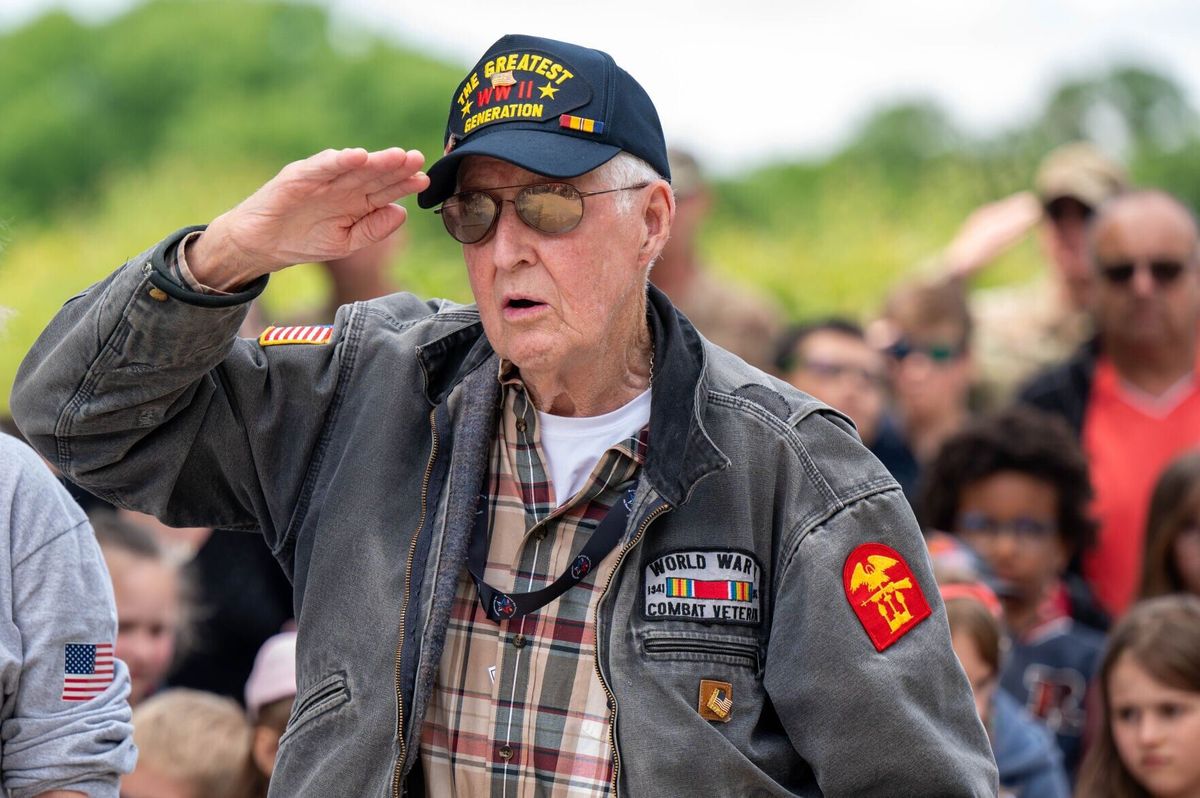
MISSOULA, Mont. — A moment decades in the making unfolded as Ron "Rondo" Scharfe, a World War II veteran, was honored by the Montana National Guard for his role in the Battle of Iwo Jima.
More than 80 years later, his story is still being told and still being felt.
"I'm here today with the luck of God and it sure is an honor to be chosen to do something like this," Scharfe said. "And if you don't hear from the guys that are still left, you're not going to hear it at all."
Scharfe was just a teenager when he served as a Navy coxswain, piloting landing craft through heavy fire and bringing Marines onto the beaches of Iwo Jima, Japan. During one landing, his boat struck an obstruction, throwing him forward as Marines around him fought to stay alive in the water.
"You know, you kept telling yourself, this is for real," Scharfe said. "Listen, this is the way it really is. There's no pulling strings on this one."
Despite being injured, Scharfe returned to duty just days later, continuing to support operations as the battle raged on.
Now, more than eight decades later, leaders with the Montana National Guard say stories like his are becoming more rare and more important to preserve.
"We're here celebrating one of our own heroes from the greatest generation that's still with us today and really trying to highlight his service and remind all of us the sacrifice that that generation went through," said Brig. Gen. Trent Gibson of the Montana National Guard.
With less than one percent of Americans serving in the military today, Gibson says fewer people have a direct connection to stories like Scharfe's.
"My own grandfather served in World War Two, but he was gone when I was two years old," Gibson said. "And so I never really got to hear those stories, never got to hear that stuff. And it's not going to be too long where those stories can't be told. And it's important for us to make sure that we're allowing them to tell them and we're helping them tell those stories."
For Scharfe, sharing those experiences is about making sure people understand what war really is before those firsthand stories are gone.
"A lot of times people can go and come whenever they want and get the full story, but they don't," Scharfe said. "So they should have a soft spot in our heart for veterans because there won't be too many of them left."

Comments ()