
‘No shouting, no ad hominem’: BridgeMSU holds discussion on Planned Parenthood
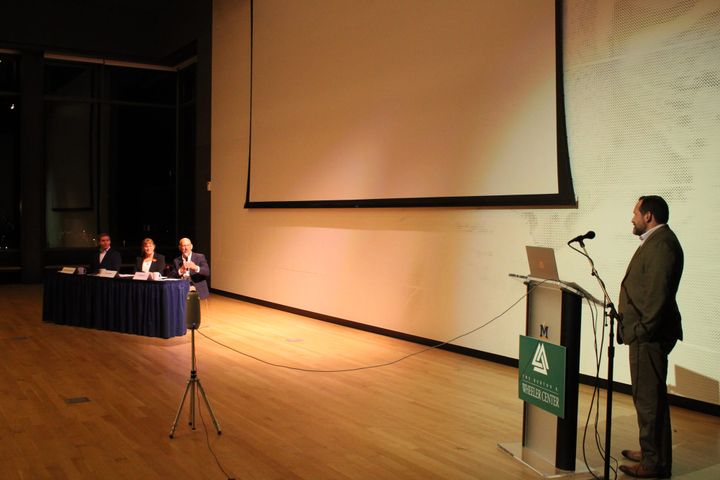
On Monday, Nov. 2, MSU’s BridgeUSA chapter (BridgeMSU) held a public discussion regarding the opening of a Planned Parenthood clinic next summer.
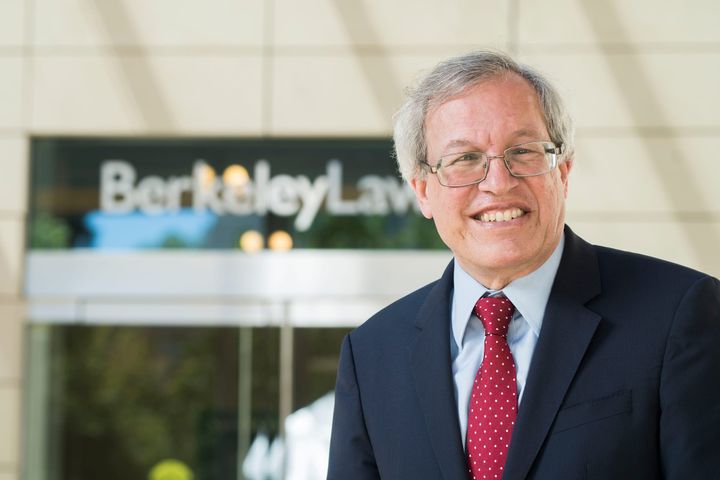
BridgeUSA is a national college organization dedicated to dissolving political divisions, according to its website. The first chapter was started at the University of California, Berkeley in 2017.
BridgeMSU’s governing body is composed of cell biology and neuroscience major Helena Archibald, political science major Caleb Szajkowski, psychology major Jacqui Pucci, political science major Nate Collier and business major Emily Sevinsky.
Archibald and Szajkowski, BridgeMSU’s co-presidents, were inspired to start the chapter by a class they had taken together the previous year.
“I was part of a class last year that discussed the New York Times every week with the honors’ dean,” Archibald said. “We both saw the need on campus to have a space where students could come and discuss politics.”
During the discussion on Monday, students covered a wide variety of topics, all stemming from the debate around Planned Parenthood’s upcoming clinic in Bozeman.
Planned Parenthood is a nonprofit organization that provides reproductive services such as STI testing, birth control, pregnancy tests and abortions.
“Planned Parenthood can just be seen as a program that offers abortions, and so somebody might just focus on that part instead of the other services that it provides that can be beneficial to a community like Bozeman,” Archibald said.
Students’ conversation on abortion dove into deeper issues such as bodily autonomy, healthcare, education, open information, basic resources and financial support for mothers, patriarchy, legal history and simply having compassion for struggling moms.
“Most attendants were pro-choice, but at the end, we had one kid, and he was pro-life,” Szajkowski said. “He gave his opinion. It was a really cool moment where everyone was able to hear something that they obviously disagreed with, and there was no yelling, no shouting, no ad hominem.”
Jacqui Pucci, BridgeMSU’s marketing director, hoped to facilitate productive dialogue in this fashion.
“[Planned Parenthood] has had so much discourse in Bozeman recently, but a lot on social media, and not a lot that’s been very productive,” she said. “We wanted to bring it into a space where people could actually talk to each other about it in a manner that was more solution-oriented. That was our goal, having it as a topic.”
Pucci also noted flaws in social media activism versus authentic conversations, which she said is one of the reasons she joined the club. “A lot of social media activism isn’t really focused on connectivity, and it’s more of getting your own opinion out there and not necessarily communicating and meeting people where they’re at,” she said. “You’re just displaying what you want to display.”
In a similar vein, Szajkowski said he believes students want to discuss current events. “I think that students here on campus are looking for an outlet to talk and engage with politics without the fanfare, without the anger that we so often see from people that come onto campus to talk at the [Malone Mall] or just general national politics,” Szajkowski said.
Siena Quesada, president of Student Advocates for Reproductive Rights (SARR), appreciated BridgeMSU’s format and rules.
“I’m just very glad they have those rules of don’t attack appearances,’ and also be respectful,” she said. “It’s so hard to be a woman and dealing with these topics and being the person who has to answer these people’s questions.”
Quesada said she also appreciated simply having a safe space to discuss controversial matters.
“I want to make sure there’s a safe space for my own community members, and there’s not many times where it’ll feel like that,” she said. “That’s why the Bridge was so great, because I knew it’d be a very safe, open space and that people who did come were coming because they were mostly respectful anyway.”
Kathryn Kelly, SARR’s vice president, said she attended the meeting for a larger purpose than conversation.
“I really wanted to respect other people’s opinions out there. People are allowed to be upset about it. That’s all the more right to them as citizens in the United States,” she said. “I really just wanted to go and be a reminder to them that, yes, you can be upset about it, but you still have to be respectful.”
Comments ()