
The little-known role structural engineers played in the aftermath of 9/11
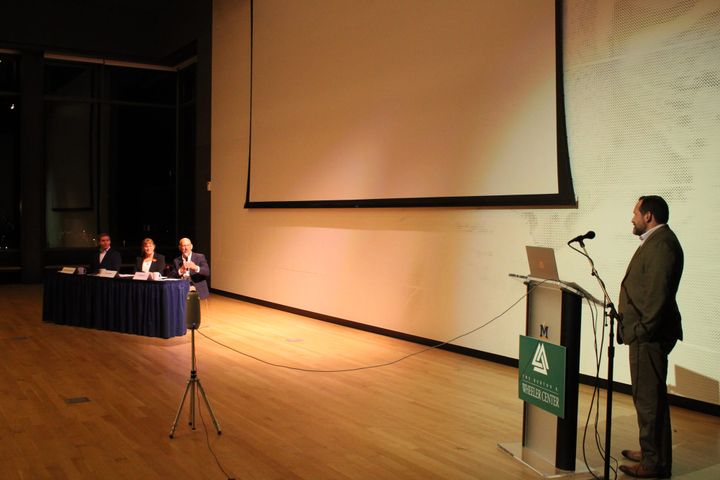
Vicki Arbitrio, a professional engineer and principal at Gilsanz Murray Steficek — a structural engineering and building envelope consulting firm in New York City — was joined by the Structural Engineers Association of Montana and the MSU Civil Engineering Department for a screening of the film “Engineers at Ground Zero” on Nov. 3.
The documentary highlighted the role structural engineers played following the terrorist attacks on Sept. 11, 2001, by ensuring safety during recovery, helping stabilize structures and preventing the Hudson River from flooding the New York City subway system.
The film followed engineers from different firms across the Northeast who came together to help monitor the safety of the twin towers, the surrounding buildings and assess whether those buildings were structurally sound. Arbitrio said she has been going to different structural engineers associations and universities to show the film.
“I’m here at MSU because I'm headed to Helena for the Joint Engineers Conference where I’ll present [the film] on Thursday, so I'm excited to be able to show it to other engineers besides just structural engineers,” she said.
According to Arbitrio, one of the important messages the film sends is that collaborating with other people can be beneficial to get more done. “Several people in the movie say that it’s easier to work as a team. And that’s not something that we always teach people,” she said.
Arbitrio highlighted that being a structural engineer consists of understanding how different materials work and interact with each other, but another aspect of being an engineer is being able to communicate effectively and ask questions.
“Being a good communicator will help you formulate questions better,” she said. “Whether that's just within your structural engineering team or once you get to work, how do you work with the architect, with the mechanical engineer?”
Abbey Dumond, a sophomore at MSU who is changing her major to civil engineering, attended the screening to learn more about the field. “I decided to attend Engineers at Ground Zero because I was talking to my statistics teacher, Anders [Larsson], in office hours and I’m thinking of changing my major to civil and that was another way that I could see what civil engineers, specifically structural engineers can do,” Dumond said.
She said that one of the biggest impacts the film had on her was seeing how everyone came together. “I’ve always known that the firefighters and the police officers helped, but this presentation showed me how much engineers can help in their communities and with emergencies. It just showed me how much their judgement is valued in emergencies like that,” Dumond said.
For Dumond, the screening taught her how broad of a career engineering can be. “When you think of engineers, you think of the beginning process, the design process and how things are built and made, but I had never thought about how they can help with [site’s] being cleaned up and the safety aspect of it,” she said.
Jami Lorenz, a civil engineering MSU alum, arranged for Arbitrio to come show the film. They connected through the National Council of Structural Engineering Associations board.
“Arbitrio has been giving that presentation all across the country for the past year for the 25th anniversary of 9/11 and that is to build more awareness of what structural engineers do,” she said.
According to Lorenz, the cultural significance of the film is to remind people that we can rely on one another for help.
“It’s bringing people together and when you have something like what happened on 9/11, you drop everything and come together as a group,” she said. “I think it’s good for students and people that we can all come together — even [the] people in that movie are competitors.”Lorenz said she hopes that by watching the film MSU civil engineering students realize the significant role they can play in their community. “I’m hoping that it was inspirational to them to be like, ‘Oh this is an important part of what structural engineers do,’” she said.
Comments ()